
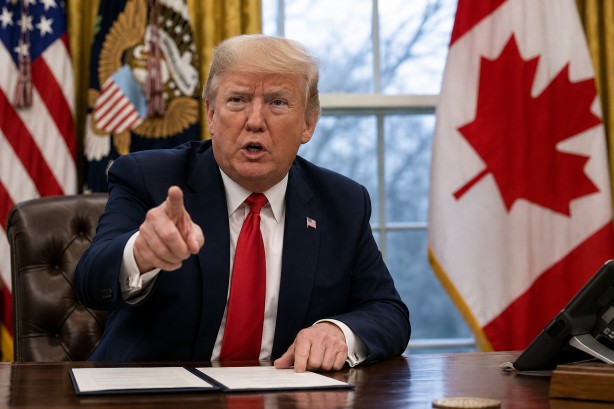
Tensions between the United States and Canada have intensified after trade talks fell apart, leading to a sharp critique from U.S. President Donald Trump. This breakdown has further fueled an ongoing trade conflict between the two nations.
The U.S. has implemented 50% tariffs on an estimated $20 billion worth of Canadian exports, impacting a wide array of products. In response, Canadian Prime Minister Mark Carney has vowed to impose equivalent tariffs, rejecting the conditions set forth by Washington. Carney has labeled the situation a trade war, accusing the U.S. of launching an economic assault on Canada. Meanwhile, U.S. Trade Representative Jamieson Greer has justified the tariffs as a necessary measure to safeguard American workers and supply chains.
This trade conflict has sparked alarm among businesses and lawmakers on both sides of the border. Canadian industry groups have expressed concern that exporters and small businesses could suffer considerable revenue declines. Similarly, U.S. legislators, particularly those representing states along the border, warn that the tariffs might lead to heightened costs for businesses, farmers, and consumers.
Canada’s retaliatory tariff plan, set to go into effect on September 8, will target various products, including steel, dairy goods, appliances, and electronics. These measures are part of Canada’s strategy to counter the U.S. tariffs and signal a firm stance against the terms proposed by the U.S.
The escalating trade dispute has also cast doubt on the sustainability of the US-Mexico-Canada trade agreement, which regulates a significant portion of North American trade. This uncertainty adds another layer of complexity to an already tense economic relationship between the neighboring countries.