
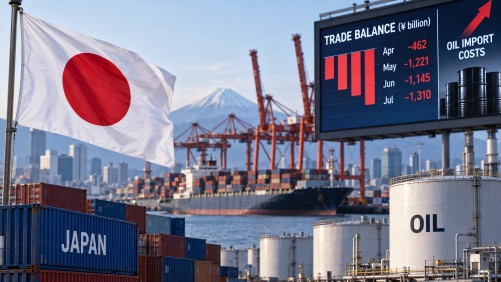
As global energy markets face disruptions, Japan’s economy is feeling the impact, evidenced by a trade deficit reaching approximately 1.1 trillion yen ($7 billion) in August. This marks the fourth consecutive month of trade shortfalls for the nation, largely driven by escalating oil prices. According to preliminary data released by Japan’s Finance Ministry, the country’s import costs surged, propelled by the turmoil in the Middle East affecting oil supplies and shipping lanes.
Japan’s reliance on imported energy has made it particularly vulnerable to the climbing crude oil prices. In August, imports saw a significant increase of 28% year-on-year, totaling 11.15 trillion yen ($71.9 billion). The disruptions around the Strait of Hormuz, a critical passage for oil transport, have exacerbated the pressures on Japan’s import expenses.
Despite the challenging import scenario, Japan’s export sector displayed resilience, with a 19.3% increase from the previous year, amounting to 10 trillion yen ($64.5 billion). This growth was predominantly supported by robust exports of automobiles and computer chips. Notably, exports to the United States rose by 24.9%, while imports from the U.S. surged by 55.2%.
Trade with Europe also saw growth, with exports rising by 11% and imports by 20.4%. However, Japan’s trade with the Middle East reflected the ongoing regional instability, with exports to the area decreasing by 5.2% and imports from the region falling by 4.2%.
The broader picture reveals Japan’s ongoing struggle with balancing its trade amidst fluctuating global energy dynamics. As the nation navigates these challenges, its economic strategies will likely need to adapt to the volatile conditions impacting its vital energy imports and overall trade balance.